How to Brush Your Child's Teeth: A Parent's Guide to Healthy Smiles
Taking care of your child's teeth starts earlier than many parents realize. Good brushing habits help protect against cavities and set the foundation for a lifetime of healthy teeth and gums.
Whether you're caring for your baby's first tooth or teaching your toddler to brush independently, here's what you need to know to make brushing time easier for both you and your little one.
Why Early Dental Care Matters
Baby teeth might seem less important because they eventually fall out, but they play a significant role in your child's development. They help children chew food properly, speak clearly, and maintain space for permanent teeth to grow in correctly.
Cavities in baby teeth can cause pain, infection, and other dental problems. Establishing good oral hygiene habits early also teaches children that brushing is a normal part of their daily routine.
When Should You Start Brushing Your Child's Teeth?
You should begin cleaning your child's mouth before their first tooth appears. Follow this simple timeline to get started.
- Before the first tooth: Gently wipe your baby's gums with a clean, damp washcloth to remove residue and help them get used to having their mouth cleaned.
- When the first tooth appears: Usually around six months, begin brushing with a soft-bristled baby toothbrush and a tiny smear of fluoride toothpaste about the size of a grain of rice.
- Around age three: Increase the toothpaste amount to a pea-sized dab.
Brush your child's teeth twice a day, especially before bedtime.
Choosing the Right Toothbrush and Toothpaste
Using the right tools can make brushing more comfortable and effective.
Choose an Age-Appropriate Toothbrush
Look for a toothbrush designed for your child's age group. Choose one with soft bristles and a small head that fits comfortably inside their mouth.
Replace the toothbrush approximately every three months, or sooner if the bristles become frayed or worn.
Use Fluoride Toothpaste
Fluoride helps strengthen tooth enamel and prevent cavities. Choose a fluoride toothpaste and use the recommended amount for your child's age.
Because young children may swallow toothpaste, supervise brushing and encourage your child to spit it out when they are able. If you have questions about fluoride or the appropriate amount of toothpaste, your dentist can provide personalized guidance.
Step-by-Step Guide to Brushing Your Child's Teeth
Brushing your child's teeth doesn't have to be a struggle. Follow these steps to make sure their teeth get a thorough cleaning.
Step 1: Get comfortable.
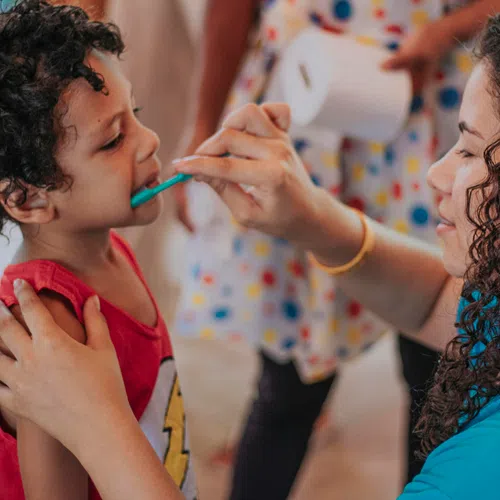
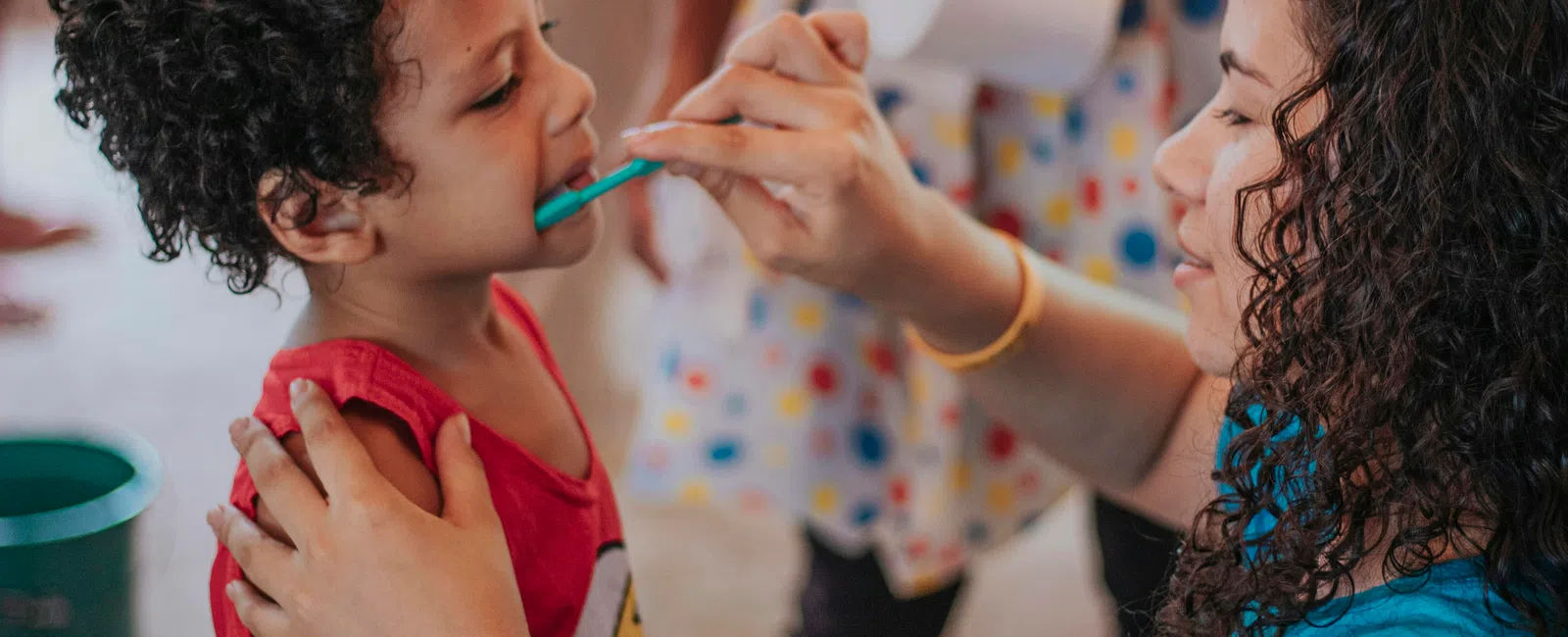
Sit your child on your lap or stand behind them, gently tilting their head back so you can see their teeth clearly.
Step 2: Position the toothbrush.
Hold the toothbrush at approximately a 45-degree angle toward the gumline. This helps you clean along the edges where the teeth and gums meet.
Step 3: Brush gently.
Use gentle, small circular motions to clean the outer and inner surfaces of every tooth, along with the chewing surfaces of the back teeth.
Step 4: Don't forget the tongue.
Gently clean your child's tongue to help remove bacteria and keep their breath fresh.
Step 5: Brush for two minutes.
Aim for about two minutes of brushing each time. If your child has trouble sitting still, try playing a favorite song or using a timer to make brushing more engaging.
Step 6: Encourage spitting.
Once your child is old enough to spit reliably, encourage them to spit out the excess toothpaste. Avoid rinsing with water afterward so the fluoride can continue protecting their teeth.
How to Make Brushing Fun for Kids
Children are often more willing to brush when it feels like a fun activity instead of a chore. A few simple strategies can help make brushing part of a positive daily routine.
- Let your child choose a toothbrush featuring their favorite color or character.
- Sing a song or play music while brushing.
- Use a two-minute timer or a brushing app.
- Create a reward chart to celebrate consistent brushing.
- Let your child practice brushing before you step in to finish the job.
Giving children some independence can help them feel involved while allowing you to make sure every tooth gets cleaned properly.
When Can Kids Start Brushing Their Teeth Alone?
Most children need help brushing effectively until around age six or seven, although every child develops differently.
A good approach is to let your child practice brushing first, then have a parent finish the job. Continue supervising until your child has the coordination and consistency needed to clean all tooth surfaces thoroughly.
Even after children begin brushing independently, occasional supervision and reminders can help reinforce good habits.
Common Toothbrushing Mistakes Parents Should Avoid
Small changes to your child's brushing routine can make a big difference in their oral health.
Brushing too quickly: Make sure you spend enough time cleaning every tooth, including the hard-to-reach back teeth.
Missing the gumline: Gently clean where the teeth meet the gums, since plaque can accumulate in this area.
Using too much toothpaste: Stick to a rice-grain-sized smear for children under three and a pea-sized amount for children ages three through six.
Skipping nighttime brushing: Brushing before bed is especially important because saliva production decreases during sleep, reducing one of the mouth's natural defenses against bacteria.
Letting young children brush without help: Children may miss important areas until their motor skills improve, so continue helping and supervising as needed.
When Should Your Child First Visit the Dentist?
Brushing at home is essential, but regular dental visits are another important part of protecting your child's smile.
The American Academy of Pediatric Dentistry recommends establishing a dental home by age one. In general, your child should have their first dental visit when their first tooth appears, and no later than their first birthday.
Regular checkups help your dentist identify potential problems early, monitor tooth development, and offer guidance on brushing, fluoride, nutrition, and cavity prevention.
Building Healthy Habits for a Lifetime
The habits you establish now can benefit your child for years to come. By brushing consistently, choosing the right toothbrush and toothpaste, and making oral hygiene enjoyable, you can help your child develop a healthy routine that lasts.
Remember, patience and consistency are key. Even when brushing feels like a struggle, your efforts are helping protect your child's teeth and build the foundation for a healthy, confident smile.